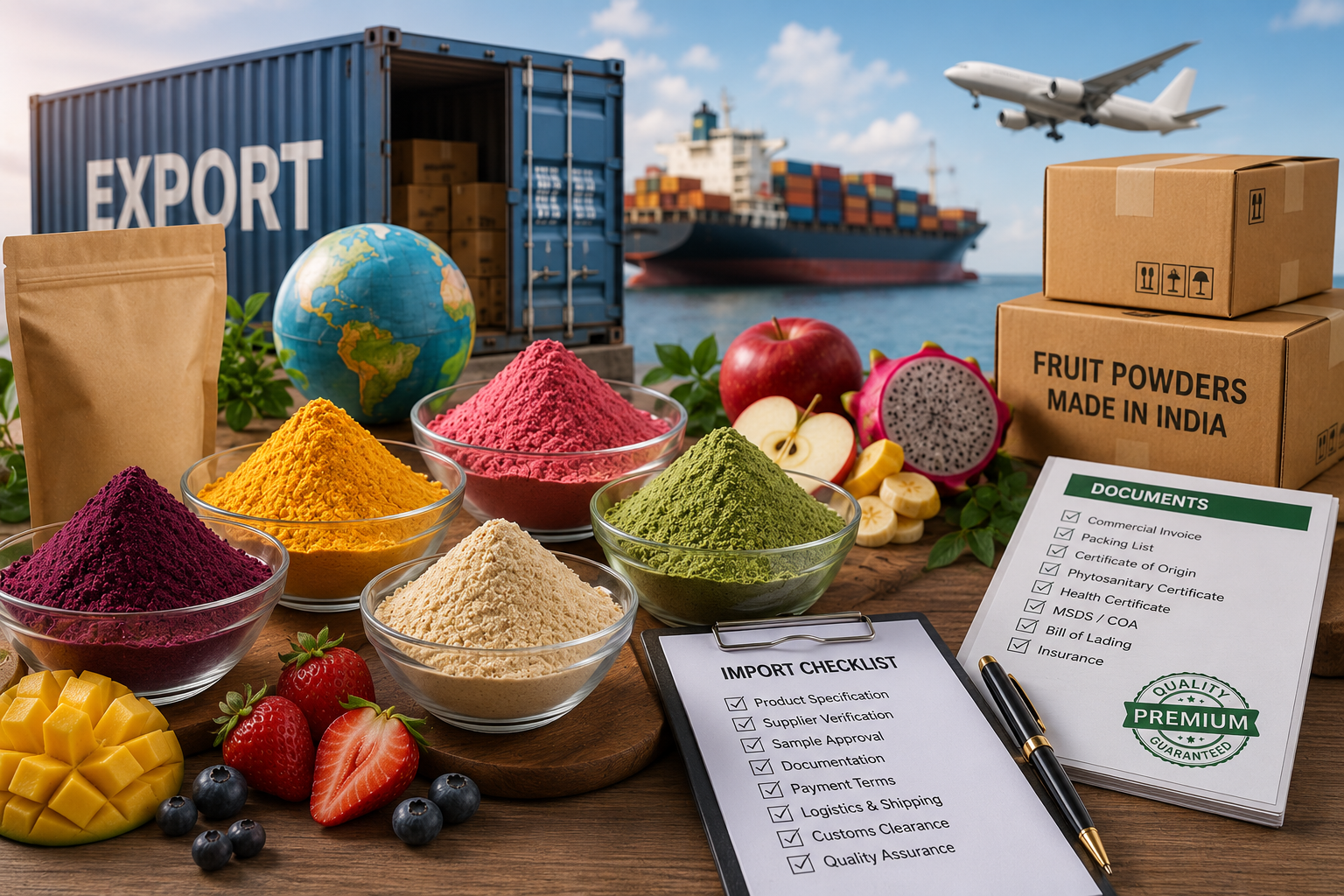

Understand the differences between ISO 22000, HACCP, and FSSC 22000 certifications, including their benefits, requirements, audit processes, and importance in global food exports.
Export Certifications Explained: ISO, HACCP & FSSC 22000
Global food trade depends heavily on safety, quality assurance, and regulatory compliance. Importers, distributors, retailers, and multinational food brands increasingly require internationally recognized food safety certifications before approving suppliers.
For food manufacturers and exporters, certifications such as ISO 22000, HACCP, and FSSC 22000 are no longer optional in many export markets. These certifications help businesses demonstrate food safety management, operational consistency, traceability, and compliance with international standards.
Whether exporting dehydrated vegetables, fruit powders, spices, ready-to-eat foods, beverages, nutraceutical ingredients, or processed foods, certification plays a critical role in building trust with global buyers.
This guide explains ISO 22000, HACCP, and FSSC 22000 certifications in detail, including their purpose, differences, audit requirements, benefits, and importance in international exports.
Why Export Certifications Matter
International food buyers prioritize supplier reliability and food safety assurance. Major reasons certifications are important include compliance with import regulations, buyer approval requirements, food safety assurance, improved traceability, reduced contamination risk, enhanced brand credibility, and global market access. Without recognized certifications, exporters may struggle to enter premium international markets.
What Is HACCP?
HACCP stands for Hazard Analysis and Critical Control Points. It is a preventive food safety management system designed to identify, evaluate, and control food safety hazards throughout the production process. The primary goal of HACCP is to prevent biological, chemical, and physical hazards before products reach consumers.
Seven Principles of HACCP
- Conduct hazard analysis
- Identify critical control points
- Establish critical limits
- Monitor control procedures
- Establish corrective actions
- Verify system effectiveness
- Maintain documentation and records
Agro Using HACCP
- Food processing
- Beverage manufacturing
- Spice production
- Dairy processing
- Seafood exports
- Meat processing
- Nutraceutical manufacturing
Benefits of HACCP Certification
- Improves food safety management
- Reduces contamination risks
- Enhances buyer confidence
- Supports export approvals
- Improves operational control
- Strengthens documentation systems
HACCP is widely recognized globally and often serves as the foundation for advanced food safety systems.
What Is ISO 22000?
ISO 22000 is an international food safety management system standard developed by the International Organization for Standardization. It combines HACCP principles with broader management system requirements. Key features include food safety risk management, communication across the supply chain, systematic process control, continuous improvement, management responsibility, and traceability systems.
Who Needs ISO 22000?
ISO 22000 applies to organizations across the food chain including food manufacturers, ingredient suppliers, packaging companies, storage providers, transport companies, exporters, and food service operators.
Benefits of ISO 22000 Certification
ISO 22000 creates a structured approach to identifying and managing food safety risks, provides stronger global credibility as international buyers often prefer suppliers with ISO-certified management systems, helps reduce operational inconsistencies through standardized procedures, and strengthens product tracking systems across production and supply chains.
What Is FSSC 22000?
FSSC 22000 stands for Food Safety System Certification 22000. It is one of the most advanced and globally recognized food safety certification schemes used in international food manufacturing. FSSC 22000 is based on ISO 22000 requirements, prerequisite programs, and additional food safety requirements. FSSC 22000 is recognized by the Global Food Safety Initiative (GFSI), making it highly valuable for companies supplying multinational brands and international retailers.
Agro Using FSSC 22000
- Processed foods
- Beverage manufacturing
- Ingredient processing
- Dairy production
- Nutraceutical manufacturing
- Packaging production
- Animal feed manufacturing
Benefits of FSSC 22000
FSSC 22000 provides GFSI recognition which many global retailers and multinational food brands specifically require. It provides advanced food safety control with stronger process management and operational controls. Exporters with FSSC 22000 certification often gain easier access to premium international markets. Global buyers frequently view FSSC 22000 as a sign of high operational maturity and compliance.
Difference Between HACCP, ISO 22000 and FSSC 22000
| Certification | Primary Focus | Global Recognition | GFSI Approved |
|---|---|---|---|
| HACCP | Hazard prevention | Widely recognized | No |
| ISO 22000 | Food safety management system | International | No |
| FSSC 22000 | Advanced food safety system | Very high | Yes |
Many exporters begin with HACCP, move to ISO 22000, and later upgrade to FSSC 22000 based on buyer requirements.
Audit and Certification Process
- Gap Analysis: Companies assess current systems against certification requirements.
- Documentation Development: Businesses prepare food safety manuals, procedures, monitoring systems, and records.
- Implementation: Food safety systems are implemented across operations.
- Internal Audit: Companies conduct internal audits to identify improvement areas.
- Certification Audit: External certification bodies conduct audits to verify compliance.
- Surveillance Audits: Periodic audits ensure continued compliance and system effectiveness.
Documents Required for Certification
- Food safety manual
- HACCP plans
- Standard operating procedures
- Cleaning and sanitation records
- Supplier approval records
- Training records
- Traceability documentation
- Corrective action reports
Common Challenges During Certification
- Incomplete documentation
- Insufficient employee training
- Poor traceability systems
- Weak process monitoring
- Infrastructure limitations
- Inconsistent implementation
Strong management commitment is essential for successful certification.
How Certifications Help Food Exporters
Certifications help exporters with market access as many international buyers require certified suppliers before onboarding. They provide assurance regarding food safety and operational reliability which reduces buyer risk. Certified exporters often gain stronger credibility in global markets and improved brand reputation. Large retailers and multinational brands prefer working with certified manufacturers, supporting better supply chain partnerships.
Which Certification Should You Choose?
Choose HACCP If
- You are starting food safety implementation
- Your market has basic compliance requirements
- You operate a smaller food business
Choose ISO 22000 If
- You want structured food safety management
- You export internationally
- You require stronger operational systems
Choose FSSC 22000 If
- You supply multinational brands
- You target premium global markets
- Your buyers require GFSI-recognized certification
Future of Food Safety Certifications
Global food safety standards continue evolving as supply chains become more complex and consumer expectations increase. Key future trends include greater traceability requirements, digital compliance systems, sustainability integration, enhanced supply chain transparency, and stronger global regulatory alignment. Exporters investing in strong certification systems will remain more competitive in international markets.
Conclusion
ISO 22000, HACCP, and FSSC 22000 certifications play a vital role in modern food exports and international food manufacturing.
These certifications help companies improve food safety, strengthen operational systems, gain buyer trust, and access global markets.
While HACCP provides the foundation for hazard control, ISO 22000 delivers broader food safety management, and FSSC 22000 offers advanced globally recognized certification suitable for multinational supply chains.
For exporters aiming to compete internationally, investing in food safety certification is not just a compliance requirement — it is a strategic business advantage.
Gallery





Raghav Sharma
Food safety consultant and export compliance specialist helping food manufacturers implement global certification systems and international quality standards.
Email: raghav@foodsafetyexports.com