
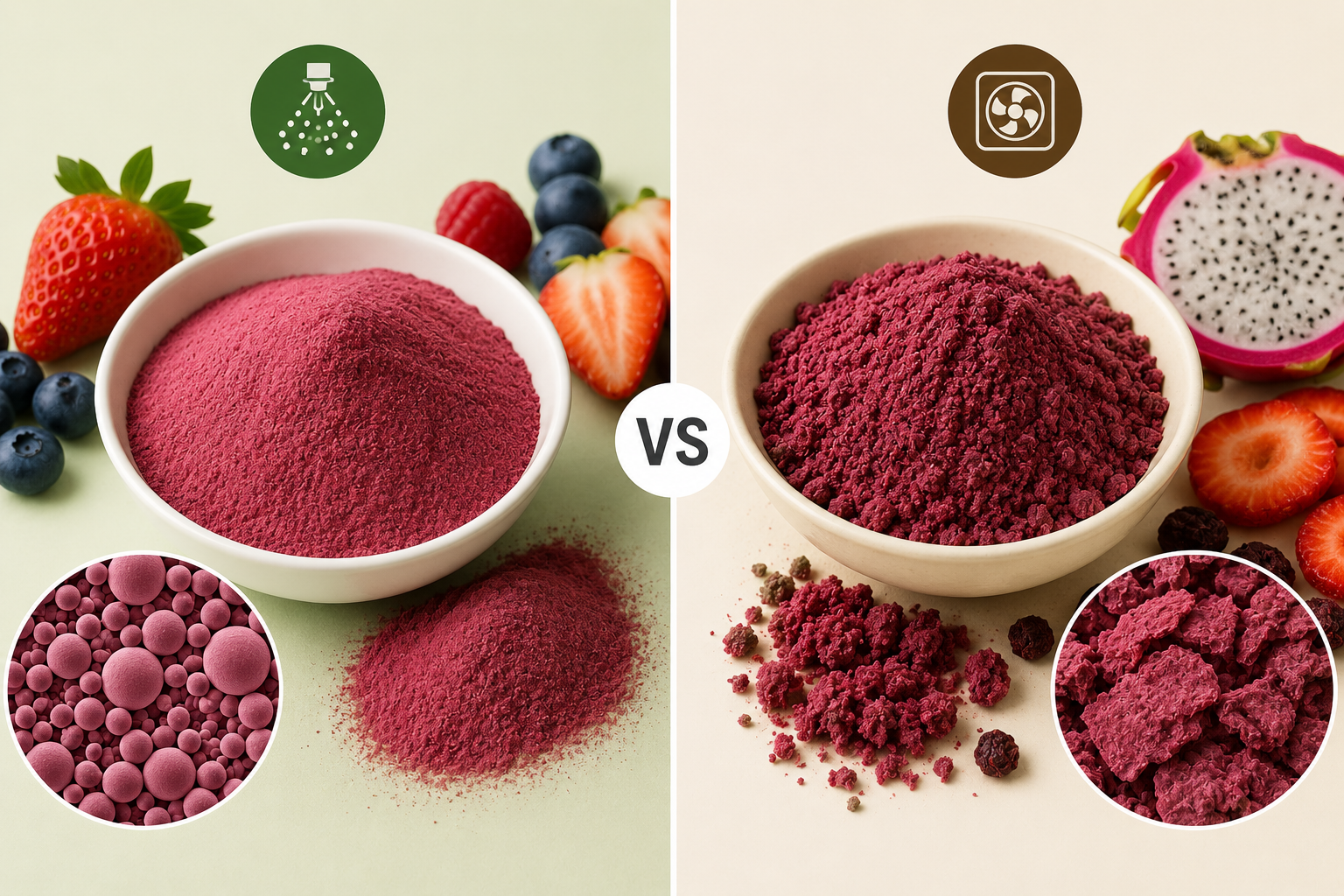
Discover the key differences between spray dried and dehydrated fruit powders. Learn how each process affects flavor, nutrition, texture, shelf life, cost, and industrial applications to choose the right fruit powder for your business.
Spray Dried vs Dehydrated Fruit Powders: Which Is Better?
Fruit powders have become essential ingredients across the global food, beverage, nutraceutical, bakery, dairy, and health supplement Agro. As demand for natural ingredients, clean-label formulations, and convenient food solutions continues to grow, manufacturers increasingly rely on fruit powders for flavoring, coloring, nutrition enhancement, and functional product development.
However, not all fruit powders are produced the same way. Two of the most common production methods are spray drying and dehydration. While both processes convert fruits into shelf-stable powdered formats, they differ significantly in manufacturing techniques, texture, nutrition retention, flavor intensity, solubility, cost, and industrial applications.
Understanding these differences is essential for food manufacturers, importers, private label brands, and ingredient buyers looking to choose the right fruit powder for their products.
This guide compares spray dried and dehydrated fruit powders in detail to help buyers make informed sourcing and formulation decisions.
What Are Fruit Powders?
Fruit powders are concentrated fruit ingredients made by removing moisture from fresh fruits and converting them into fine powder form. These powders retain much of the fruit's natural flavor, color, aroma, and nutritional value while offering longer shelf life and easier storage.
Common Applications of Fruit Powders
- Health supplements
- Protein blends
- Instant beverage mixes
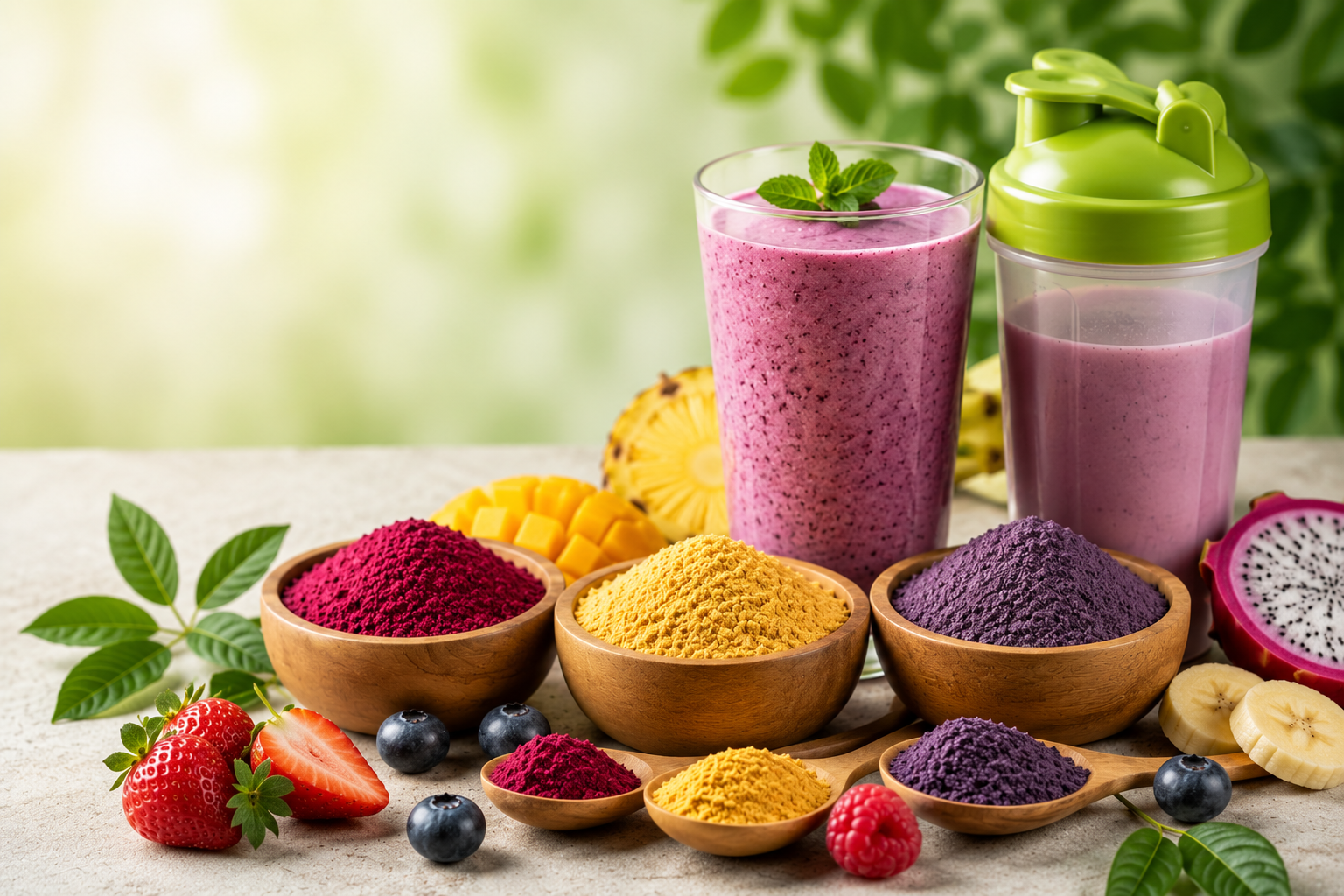
- Smoothie formulations
- Bakery products
- Dairy products
- Snack seasoning
- Functional foods
- Baby foods
- Cosmetic and skincare products
What Is Spray Drying?
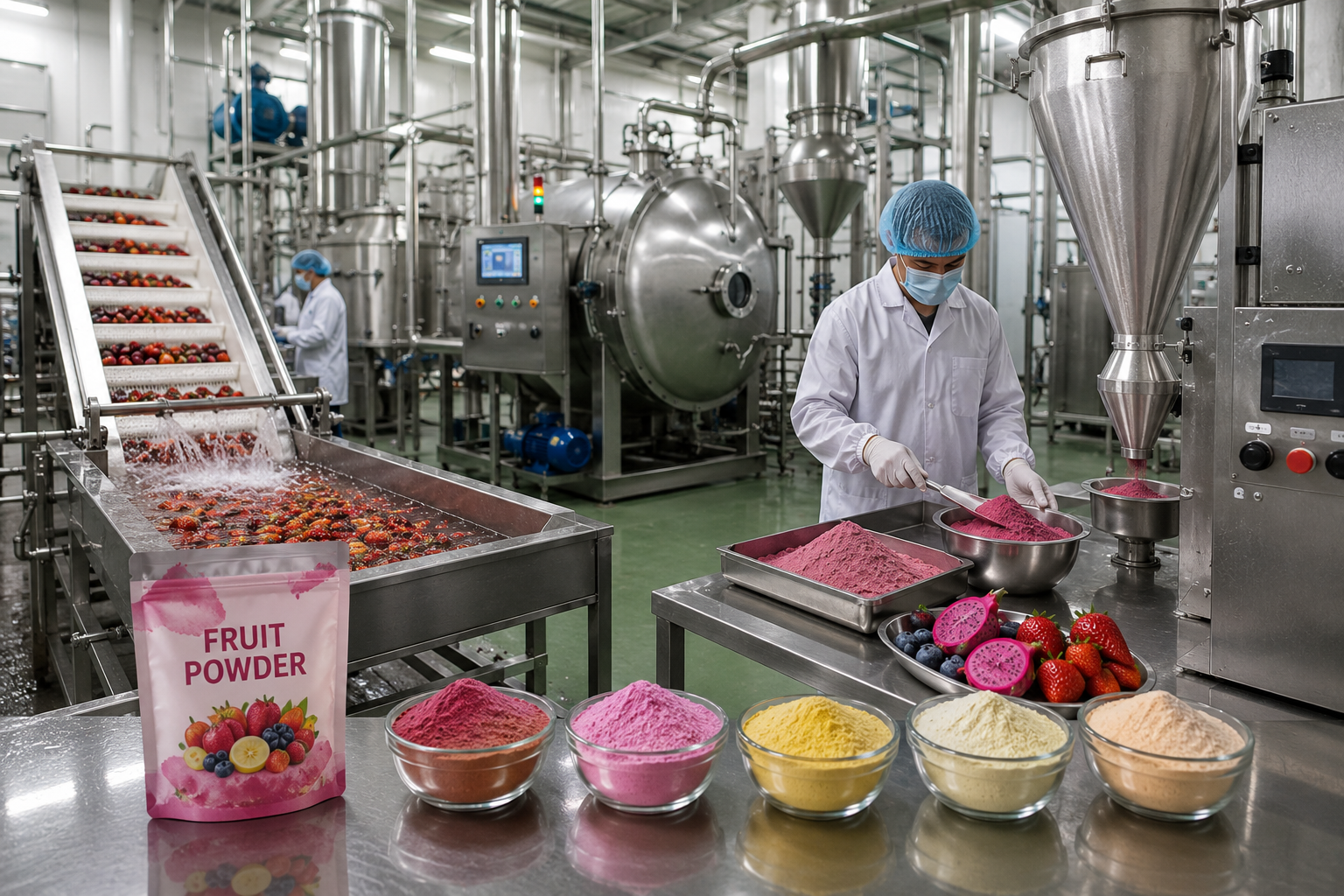
Spray drying is an advanced manufacturing process where fruit juice or puree is atomized into tiny droplets and exposed to hot air inside a drying chamber. The moisture evaporates rapidly, leaving behind a fine powder.
Spray Drying Process
- Fruit washing and sorting
- Juice or puree extraction
- Filtration and concentration
- Addition of carrier agents like maltodextrin
- Atomization into drying chamber
- Rapid hot-air drying
- Powder collection and packaging
Advantages of Spray Dried Fruit Powders
- Excellent solubility
- Smooth and fine texture
- Uniform particle size
- Long shelf life
- Better flowability
- Suitable for instant beverages
- Large-scale industrial production
Limitations of Spray Dried Powders
- May contain carrier agents like maltodextrin
- Potential nutrient loss due to heat exposure
- Slightly diluted fruit concentration
- Higher processing complexity
What Is Dehydration?
Dehydrated fruit powder is produced by removing moisture directly from fruit slices or pulp using controlled drying methods such as air drying, vacuum drying, freeze drying, or drum drying. The dried fruit is then ground into powder.
Dehydration Process
- Fruit selection and cleaning
- Slicing or pulping
- Moisture removal through drying
- Grinding and pulverization
- Sieving and quality testing
- Packaging
Advantages of Dehydrated Fruit Powders
- Higher natural fruit content
- Minimal additives
- Stronger fruit flavor
- Better clean-label positioning
- Enhanced fiber retention
- Suitable for premium products
Limitations of Dehydrated Powders
- Reduced solubility in liquids
- Higher moisture sensitivity
- Possible clumping issues
- Shorter shelf life compared to spray dried powders
- Higher production costs for some drying methods
Key Differences Between Spray Dried and Dehydrated Fruit Powders
| Factor | Spray Dried Powder | Dehydrated Powder |
|---|---|---|
| Manufacturing Input | Juice or puree | Whole fruit or pulp |
| Texture | Fine and smooth | Slightly coarse |
| Solubility | Excellent | Moderate |
| Flavor Intensity | Mild to moderate | Strong natural flavor |
| Carrier Agents | Often required | Usually minimal or none |
| Fiber Content | Lower | Higher |
| Shelf Life | Longer | Moderate |
| Clean Label Appeal | Moderate | High |
| Best Applications | Beverages and instant mixes | Premium foods and supplements |
Nutrition Comparison
Nutritional retention depends heavily on processing temperature, drying duration, fruit type, and storage conditions.
Spray Dried Powder Nutrition
Spray drying can preserve many nutrients effectively when optimized properly. However, exposure to high temperatures may reduce heat-sensitive vitamins such as vitamin C and certain antioxidants.
Dehydrated Powder Nutrition
Dehydrated powders, especially freeze-dried variants, often retain more natural nutrients, fiber, and phytonutrients because of gentler moisture removal techniques.
Which Is Better for Different Agro?
Beverage Industry
Spray dried powders are generally preferred because they dissolve quickly and create smoother beverage textures.
Health Supplements
Dehydrated fruit powders are commonly favored for clean-label and whole-food supplement positioning.
Bakery and Snack Manufacturing
Both options are widely used depending on flavor intensity and processing requirements.
Cosmetics and Skincare
Dehydrated powders are often preferred for natural skincare and botanical formulations.
Shelf Life and Storage
Proper storage is critical for maintaining quality and preventing moisture absorption.
Spray Dried Powder Storage
- Typically offers longer shelf life
- Lower moisture activity
- Better resistance to caking
- Suitable for humid climates
Dehydrated Powder Storage
- Requires moisture-resistant packaging
- More sensitive to humidity
- May require oxygen absorbers
- Premium packaging often recommended
Clean Label and Consumer Trends
Consumers increasingly prefer products with recognizable and minimally processed ingredients.
Dehydrated fruit powders often align better with clean-label trends because they may contain no carrier agents, no artificial additives, higher natural fruit content, and simpler ingredient declarations.
However, spray dried powders remain highly popular due to cost efficiency, scalability, and convenience for industrial manufacturing.
Cost Considerations
Pricing depends on fruit type, production technology, packaging requirements, certifications, and order quantity.
Spray Dried Powder Costs
- More economical for large-scale beverage production
- Lower transportation cost due to consistent flowability
- Efficient industrial scalability
Dehydrated Powder Costs
- Premium positioning may increase pricing
- Freeze-dried powders are especially expensive
- Higher fruit concentration often adds value
How to Choose the Right Fruit Powder
The best option depends on your product goals, target audience, processing requirements, and budget.
Choose Spray Dried Powder If:
- You manufacture instant beverages
- You need excellent solubility
- You prioritize large-scale production efficiency
- You require long shelf life
- You need cost-effective ingredient sourcing
Choose Dehydrated Powder If:
- You want clean-label positioning
- You need stronger natural flavor
- You prefer minimal additives
- You target premium health-conscious consumers
- You prioritize whole-food nutrition
The Future of Fruit Powder Manufacturing
The fruit powder industry continues to evolve with innovations in low-temperature drying, sustainable processing, organic production, and clean-label ingredient technology.
Manufacturers are increasingly investing in advanced freeze-drying systems, improved spray drying efficiency, organic fruit sourcing, natural carrier alternatives, enhanced nutrient preservation, and sustainable packaging solutions.
As consumer demand for natural and functional ingredients rises, both spray dried and dehydrated fruit powders will continue to play important roles across multiple Agro.
Conclusion
Neither spray dried nor dehydrated fruit powders are universally better. The right choice depends entirely on the intended application, formulation goals, target market, and budget considerations.
Spray dried powders excel in solubility, shelf stability, and industrial scalability, making them ideal for beverages and large-scale food manufacturing.
Dehydrated fruit powders offer stronger natural flavor, cleaner labels, and higher whole-fruit appeal, making them particularly valuable for premium health-focused products.
For global buyers, understanding the technical and commercial differences between these two production methods is essential for selecting the best ingredient solution and building successful long-term product strategies.
Gallery

Ananya Mehta
Food ingredient industry researcher and technical content strategist specializing in fruit powders, spray drying technology, dehydrated foods, and functional ingredient sourcing.