Learn how food manufacturers use tomato powder in ready-to-eat products for flavor enhancement, natural coloring, shelf stability, cost efficiency, and clean-label formulations across global food Agro.
How Food Manufacturers Use Tomato Powder in Ready-to-Eat Products
The global ready-to-eat food market has experienced rapid growth over the past decade as consumers increasingly seek convenient, flavorful, and shelf-stable meal solutions. From instant noodles and snack seasonings to soups, sauces, frozen meals, and meal kits, manufacturers are constantly searching for versatile ingredients that improve flavor, color, nutrition, and production efficiency.
Tomato powder has emerged as one of the most valuable functional ingredients in the ready-to-eat food industry. Produced by dehydrating fresh tomatoes and grinding them into a fine powder, tomato powder offers concentrated tomato flavor, natural color, longer shelf life, and easier storage compared to fresh tomatoes or liquid tomato products.
Today, food manufacturers across the world use tomato powder in a wide variety of ready-to-eat products to enhance taste, streamline production, reduce waste, and support clean-label product development.
This guide explores how tomato powder is used in modern food manufacturing and why it has become an essential ingredient in the convenience food sector.
What Is Tomato Powder?
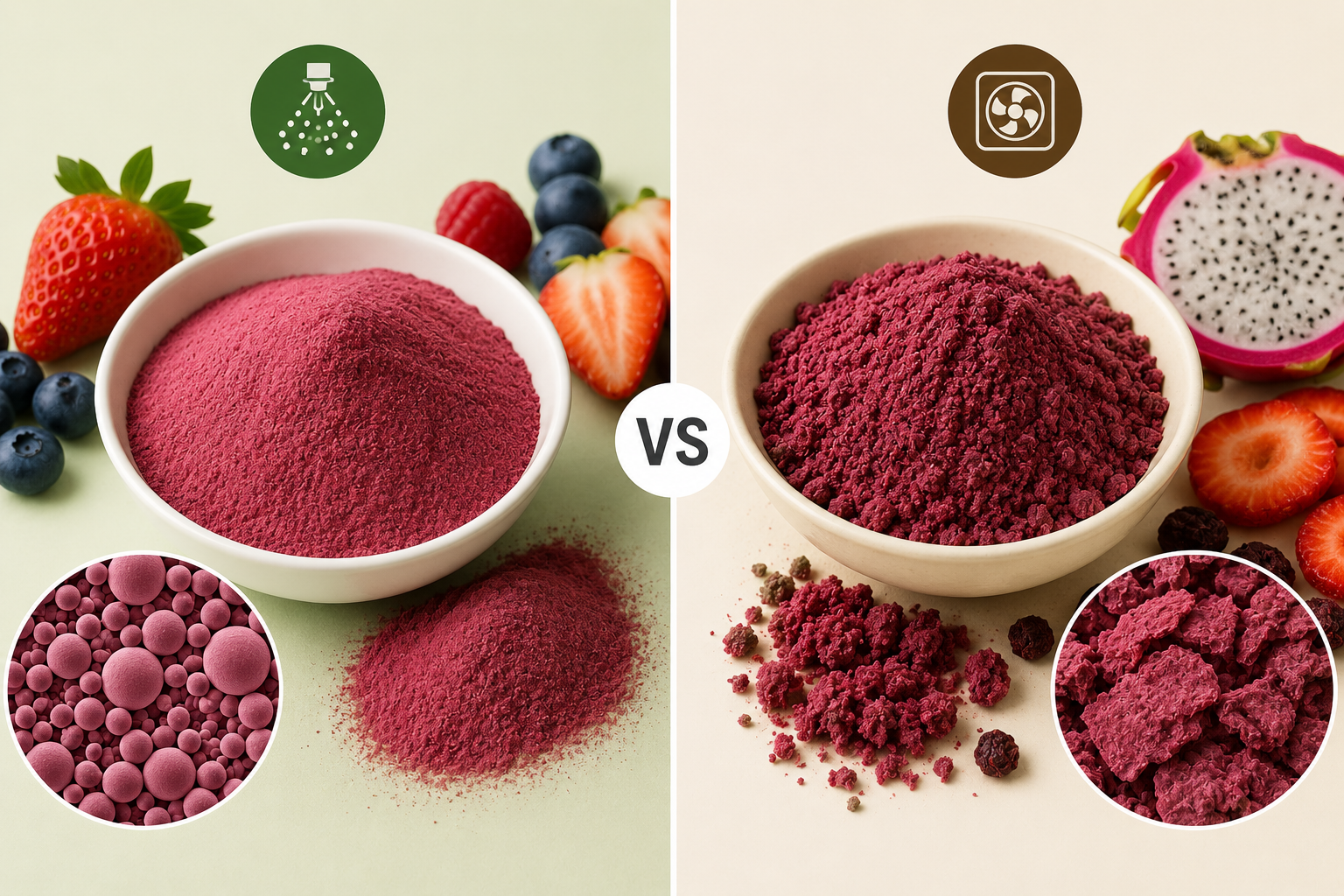
Tomato powder is made by dehydrating ripe tomatoes through methods such as spray drying, drum drying, or air drying and then milling them into powder form.
The powder retains much of the tomato's natural flavor, acidity, color, and nutritional value while offering improved shelf stability and reduced transportation costs.
Key Characteristics of Tomato Powder
- Concentrated tomato flavor
- Natural red color
- Low moisture content
- Long shelf life
- Easy blending and mixing
- Excellent storage stability
- Versatile industrial applications
Why Food Manufacturers Prefer Tomato Powder
Tomato powder provides several operational and commercial advantages for ready-to-eat food production.
Extended Shelf Life
Unlike fresh tomatoes, tomato powder can be stored for extended periods without rapid spoilage, making inventory management more efficient.
Reduced Transportation Costs
Because moisture has been removed, tomato powder is lighter and easier to transport compared to tomato puree or fresh tomatoes.
Consistent Flavor and Color
Manufacturers benefit from standardized flavor profiles and consistent natural coloring across production batches.
Improved Production Efficiency
Tomato powder integrates easily into dry mixes, seasoning systems, sauces, and instant formulations.
Reduced Food Waste
Using powdered ingredients reduces spoilage-related losses associated with fresh produce handling.
Applications in Ready-to-Eat Products
Instant Noodles and Seasoning Mixes
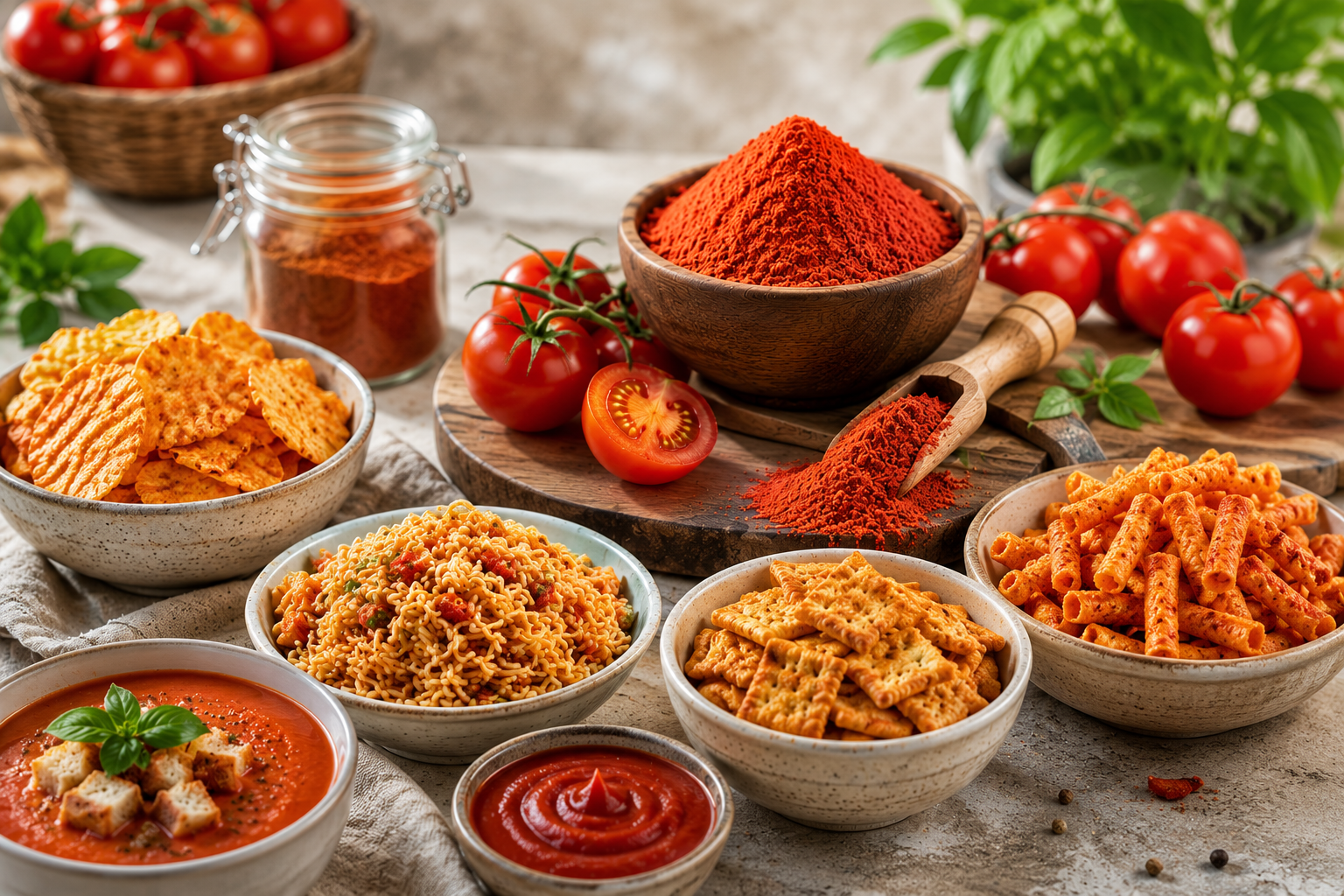
Tomato powder is widely used in instant noodle flavor sachets and seasoning blends. Manufacturers use it to provide tangy tomato flavor, natural red-orange color, savory depth, and improved seasoning consistency.
It is commonly found in tomato-flavored noodles, masala seasoning mixes, snack flavor coatings, and instant pasta seasonings.
Soups and Instant Meals
Tomato powder is a key ingredient in dehydrated soup formulations because it dissolves quickly and delivers concentrated flavor.
Applications include instant tomato soup, cup soups, freeze-dried meals, ready meal kits, and rice and pasta mixes.
Snack Food Manufacturing
Snack manufacturers use tomato powder extensively in seasoning systems for chips, extruded snacks, popcorn, and crackers.
Benefits for Snack Manufacturers
- Strong flavor adhesion
- Natural coloring properties
- Balanced acidity
- Improved seasoning uniformity
- Clean-label positioning
Sauces and Gravy Mixes
Dry sauce and gravy manufacturers use tomato powder to create shelf-stable formulations that can be quickly reconstituted with water. Popular applications include pasta sauce mixes, pizza sauce bases, curry gravies, dip mixes, and marinade blends.
Frozen and Ready Meals
Frozen food manufacturers often incorporate tomato powder into prepared meals for flavor consistency and production efficiency. Examples include frozen pasta dishes, ready-to-cook curries, prepared rice meals, lasagna fillings, and vegetable meal mixes.
Bakery and Savory Products
Tomato powder is increasingly used in savory bakery applications such as crackers, breadsticks, premixes, and savory biscuits.
Functional Benefits of Tomato Powder
Natural Coloring Agent
Tomato powder provides natural red and orange pigmentation, helping manufacturers reduce dependence on synthetic food colors.
Flavor Enhancement
The natural umami and acidity of tomatoes enhance savory formulations and improve overall taste perception.
Nutritional Value
Tomato powder contains beneficial compounds such as lycopene, vitamin C, potassium, and antioxidants. These nutrients support functional food positioning and health-oriented product marketing.
Improved Texture and Binding
In some dry formulations, tomato powder helps improve texture consistency and seasoning adhesion.
Clean Label and Natural Food Trends
Consumers increasingly demand natural ingredients and recognizable labels in convenience foods. Tomato powder aligns well with clean-label trends because it is derived from natural tomatoes, can replace artificial flavors, supports natural coloring claims, and works well in minimally processed formulations.
Food brands increasingly use tomato powder to create products marketed as having no artificial colors, no synthetic flavors, plant-based, and natural ingredient products.
Manufacturing Considerations
Particle Size Selection
Manufacturers choose different mesh sizes depending on application requirements.
- Fine powders for beverages and soups
- Medium mesh for seasonings
- Coarser granules for texture applications
Moisture Control
Low moisture content is essential for maintaining shelf life and preventing clumping during storage.
Packaging Requirements
Industrial tomato powder is commonly packaged in multi-layer kraft bags, food-grade HDPE bags, vacuum-sealed packaging, and retail pouches.
Quality and Food Safety Standards
Large-scale food manufacturers typically source tomato powder from certified suppliers that comply with international food safety standards.
Important Certifications
- FSSC 22000
- ISO 22000
- HACCP
- BRCGS
- FDA Registration
- Halal Certification
- Kosher Certification
Quality Testing Parameters
- Moisture content
- Microbiological analysis
- Color consistency
- Lycopene levels
- Particle size
- Pesticide residue testing
- Heavy metal analysis
Global Market Demand for Tomato Powder
The demand for tomato powder continues to grow due to expansion in ready-to-eat foods, convenience snacks, instant meals, functional foods, plant-based products, and clean-label food manufacturing. Asia-Pacific, North America, and Europe remain major growth markets for dehydrated tomato ingredients.
The Future of Tomato Powder in Food Manufacturing
Food manufacturers are increasingly investing in sustainable ingredient sourcing, cleaner labels, and efficient production systems. Tomato powder supports these goals by offering reduced food waste, lower logistics costs, longer ingredient stability, natural flavor enhancement, and scalable industrial use.
As convenience foods continue evolving, tomato powder is expected to remain a key ingredient across global ready-to-eat product categories.
Conclusion
Tomato powder has become an essential ingredient in modern ready-to-eat food manufacturing due to its versatility, shelf stability, flavor intensity, and clean-label advantages.
From instant noodles and soups to snacks, sauces, frozen meals, and seasoning blends, food manufacturers rely on tomato powder to improve production efficiency while meeting consumer demand for flavorful and convenient food products.
As global demand for natural and shelf-stable ingredients continues to rise, tomato powder will remain one of the most valuable dehydrated ingredients in the food processing industry.
Gallery



Rhea Kapoor
Food industry content strategist and ingredient market researcher specializing in dehydrated vegetables, food processing technologies, and ready-to-eat product innovation.